

Botox vs. Fillers: Which One Do You Actually Need?

Almost every injectable consultation we do in Newton, Acton, and Natick starts the same way: someone points at their face and says, “I want Botox here.” About half the time, Botox isn’t what will fix the thing they’re pointing at. Sometimes the honest answer is filler. Sometimes it’s neither. So let’s lift the veil — not the brochure version, the version we’d tell a friend.
The Actual Difference: Movement vs. Volume
Botox and its cousins are neuromodulators: they temporarily quiet the muscle that creases the skin. Fillers are gels — usually hyaluronic acid — that add volume back where you’ve lost it. That single distinction decides almost everything:
- Lines that appear when you move — forehead lines, the “11s” between your brows, crow’s feet when you smile — are muscle-driven. Neuromodulator territory.
- Lines and hollows visible when your face is completely still — flat cheeks, deep nasolabial folds, under-eye hollows, thinning lips, marionette lines — are volume loss. Filler territory.
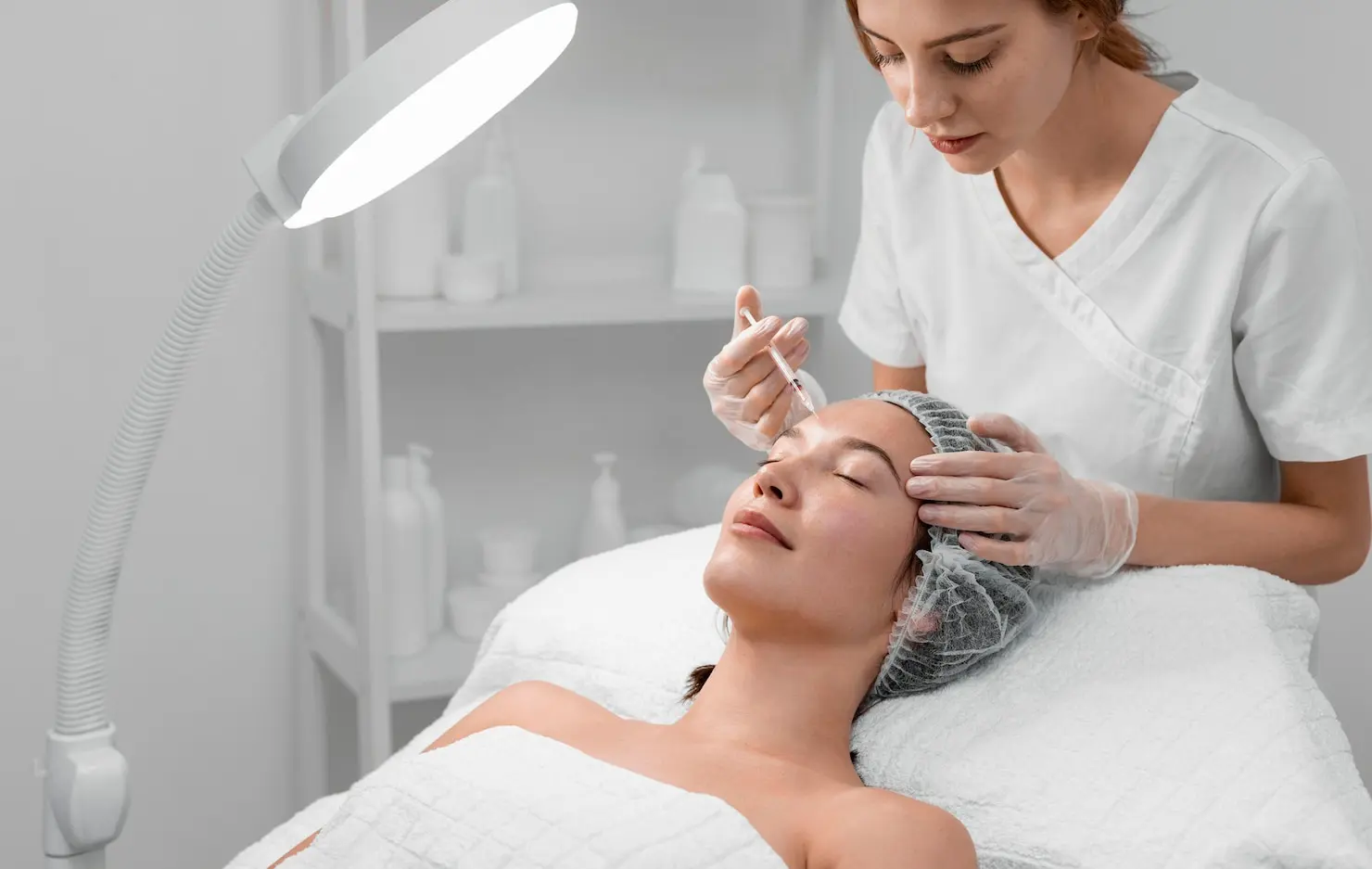
The easy home test: relax your face completely in a mirror. Whatever is still visible won’t be fixed by Botox. Whatever disappears when you stop the expression is exactly what Botox is for.
The part most websites skip: plenty of faces have both at once, so “Botox vs. fillers” is often the wrong question — the real one is the proportion of each.
What to Expect, and When
Botox timeline. Nothing happens for two to three days. You’ll see real change around day four or five, and the final result at about two weeks. Don’t panic on day three, and don’t book a wedding for day five. It typically softens after three to four months.
Filler timeline. The opposite. You see volume immediately — along with swelling and possibly bruising for the first several days. Lips are the most dramatic and can look alarming for 48 hours. Filler settles at about two weeks and lasts from several months to a couple of years, depending on product and area.
Realistic expectation for both: this is softening, not erasing. Deep lines etched in over decades will improve, not vanish. Anyone promising otherwise is selling you something.
Side Effects, Honestly — and How We Prevent Them
Pinprick bruising and small bumps are common with both and resolve on their own. Beyond that:
With neuromodulators, the real risk is a temporary droop — an eyelid or an unevenly lifted brow — from product placed or migrating into the wrong muscle. Uncommon, temporary, and almost entirely a technique problem.
With fillers, the concerns are lumps, migration (especially lips and under the eyes), and the rare but serious one: product entering a blood vessel. That’s why injector training matters, why we use cannulas in high-risk areas where appropriate, and why we keep dissolving agent on hand. It’s also why we’ll say no. Thin, crepey under-eye skin — or someone already carrying a lot of product — gets a different plan, often Morpheus8 skin tightening or microneedling, rather than more filler. The screening conversation before the needle is the safety step, and we don’t rush it.
How Much Do Botox and Fillers Cost — and Why We Won’t Post a Number
This is the most-searched question about injectables, so let’s answer it straight.
Fillers generally cost more per treatment than a neuromodulator, since you’re paying for syringes of product rather than units. But that comparison is close to useless for you personally, because neither is priced per face. Botox is priced by units, and the units you need depend on your muscle strength, anatomy, and how much movement you want to keep. Filler is priced by syringe, and the number depends on how much volume you’ve lost and where.
So we don’t publish prices, and we won’t quote one over the phone. A number given before anyone has looked at your face is a generic package, not a plan — that’s how people end up buying three syringes when they needed one, or paying for a “special” on an area that was never the problem.
In a real consultation we’ll tell you what you need, what it costs, and what maintenance runs — before you commit. Don’t shop injectables on sticker price. A cheap result on your face is expensive to fix.
Why Newton, Acton & Natick Patients Choose Skin Tight MedSpa
We’re a local practice, which means we see you again — we’re the people you’ll sit in front of in four months when it’s time to reassess, and that changes how we treat.
Our providers are experienced with both neuromodulators and dermal fillers, and willing to tell you when you don’t need something. Every plan is built around your face and your budget, not a menu. With locations in Acton, Newton, and Natick, follow-up is a short drive.
Frequently Asked Questions
Can you get Botox and fillers at the same appointment?
Yes, and it’s extremely common — they do different jobs. Your provider will sequence them appropriately in one visit.
Is Botox or filler more worth the money?
Neither, universally. It depends on whether your concern is movement or volume — money spent on the wrong one is money wasted.
Which should I do first if I’ve never had anything done?
Most people start with a conservative neuromodulator treatment. It’s shorter-lasting, so if you don’t love it, it resolves on its own in a few months.
How long do results really last?
Neuromodulators, roughly three to four months. Fillers, several months to a couple of years depending on product and placement. Both fade gradually.
Not sure which one you need? That’s what a consultation is for. Book an honest injectable consult at our Acton, Newton, or Natick location and we’ll tell you what will actually work — including if the answer is nothing yet. Learn more about our Botox and dermal filler treatments.


